The methodology trap
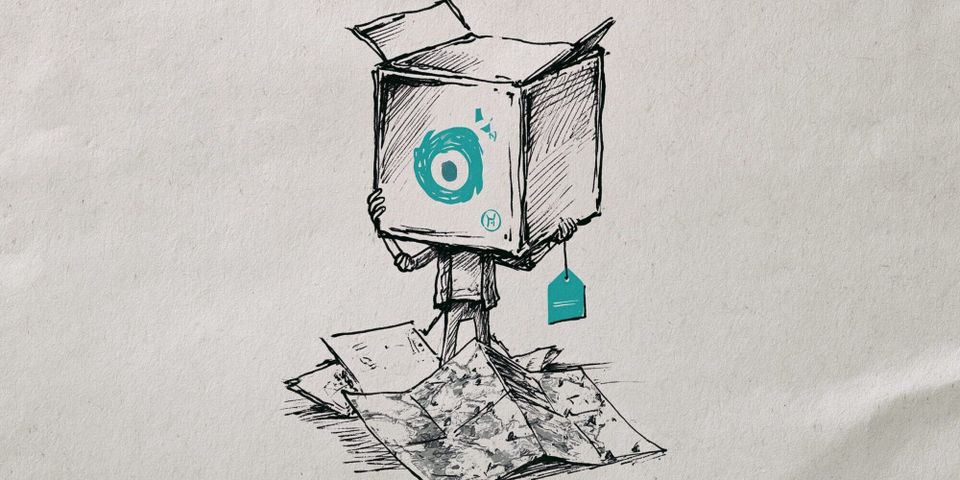
TLDR — If you are looking to solve your business problem by buying a methodology sold as a panacea, a branded set of steps promising a pathway to value. Stop. It never works, because the steps were never the hard part. The hard part is the mindset underneath them, and that is the one thing you can't buy in a box.
Somewhere in a meeting room, right now, someone is being sold a methodology.
It has a name. Probably a trademark symbol after it. It comes with a diagram so busy it needs its own legend, a certification scheme, and a confident and articulate person explaining that once you adopt it (properly, mind, you have to really commit!) your organisation will become agile, transformed, data-driven, customer-centric, mobile-first, agentic-first, substitute whatever the word / phrase of the year happens to be.
It will cost a fortune. It will take years. And at the end of it, when not much has changed, the answer will be that you didn't implement it properly. So you'll buy some more help to implement it properly.
This is where Mindset, Method, Momentum started, for me. Years of watching the same expensive disappointment play out, and slowly realising that the failures had almost nothing to do with the methods being chosen, and almost everything to do with what was missing underneath them.
Oh, and don't let me give you the impression that I have been somehow immune from this and never fallen for this. Sadly, I have been the buyer, sponsor and participant in these projects, but over time, the issues became ever more clear.
Method is not methodology
Here's the distinction the whole thing turns on, and I'll be pedantic about it because the pedantry is the point.
A method is a way of getting something done. Scrum is a method. Lean is a method. Six Sigma, Prince2, all methods. Even waterfall, much maligned, is a perfectly good method in the right place. None of these are the problem. They're tools, and like any tool they work beautifully in the context they were built for and badly everywhere else.
A methodology, in the sense I mean it (the sense the snake-oil version trades on), is something else: a method sold as a universal answer. Buy this, follow the steps, receive the outcome. It takes a contextual tool and dresses it up as a panacea. And the moment you're promised a guaranteed outcome from a set of steps alone, you should run a mile, because someone has just quietly removed the hard part and overcharged you for the easy one.
The clue is often right there in the branding. When a way of working has a trademark symbol after it, an accreditation pathway, and a price list, you're not looking at a method any more. You're looking at a product. And the product's job is to sell, which is a different job from adding any value to you.
A methodology is something you can purchase. A mindset is something you have to craft and build.
A framework named for agility, deployed without any
A good example of this is the Scaled Agile Framework, SAFe, as it's deployed by big consultancies inside large enterprises.
The irony writes itself. Here is a framework with agile in the name, frequently rolled out in about the least agile way imaginable: rigid planning cadences, a hierarchy of new roles, ceremonies observed like liturgy, and an enterprise that comes out of the other end behaving almost exactly as it did before, only now with new vocabulary and a wall planner. Critics have a sharper phrase for it than I'd dare: that it gives an organisation the illusion of agility while leaving the legacy behaviours completely intact. There's a whole cottage industry now of practitioners pushing back, and the market is visibly shifting towards framework-agnostic help, people who'll ask what you're really trying to do before they tell you which box to buy.
Now, to be fair to SAFe, and this is a nuance that matters, it isn't worthless. Simon Wardley made this point well: SAFe very likely has a context in which it works perfectly well. The sin was never the framework existing. The sin was insisting it works in all contexts. As Wardley has long argued, there's no one-size-fits-all for project management, or finance, or marketing, and being genuinely agile means applying the appropriate method to each context, not stamping the same ritual over everything and calling it transformation. Twenty years on, we're still having to say this. We probably will be in another twenty.
So the framework isn't the villain. The villain is the mindset that reaches for a branded methodology precisely so that it doesn't have to do the harder thinking: the thinking about what we're really trying to achieve, and whether we have the clarity and the will to achieve it.
Why it keeps working on the buyer
Because buying a methodology feels like progress. There's a logo, a plan, a budget, a kick-off. Activity rises. Confidence spikes. It's a placebo, and a comfortable one, because it locates the answer outside ourselves. If the method is the answer, then our mindset was never the question.
That's the seduction, and it's the same at every level. The individual buys the diet book instead of confronting why they eat. The team adopts the framework instead of asking whether it trusts itself to make a decision. The organisation runs the transformation programme instead of admitting its culture, its collective mindset, is the thing that needs to move, and that no consultant can move it for them.
A methodology is something you can purchase. A mindset is something you have to craft and build. One of those is much easier to put on a credit card, which is exactly why the wrong one gets bought.
The fix
So if you can't buy the panacea, you can do the things it was pretending to do for you.
Be stubborn about your goals, and flexible about your methods. Get ruthless clarity on the outcome you want. And I mean ruthless: you must propose a view, encourage challenge, argue the alternatives, debate the options, challenge again. That's the mindset work, and it's the part everyone skips. Then choose your methods intentionally, curated around that goal, and be willing to mix them, swap them, and drop them as context changes. A good operating model isn't a methodology you install; it's a set of methods you've deliberately chosen and set within a clear sense of why.
Dee Hock, who built Visa, put it better than I can: "Far better than a precise plan is a clear sense of direction and compelling beliefs." That's the whole thing. Clarity of direction is mindset. Choosing how to move is method. Moving, and adjusting as you learn, is momentum. The branded box only ever sold you the middle one, and charged you for all three.
So by all means learn the methods. Learn all of them. They're a search away in these days of LLMs, and most are genuinely useful in their place. Just stop expecting any of them to save you. The salvation was never in the box. It was in the clarity you brought to choosing, and the will you brought to carrying it through.
That part can't be bought. It never could.