
They're selling you a noun
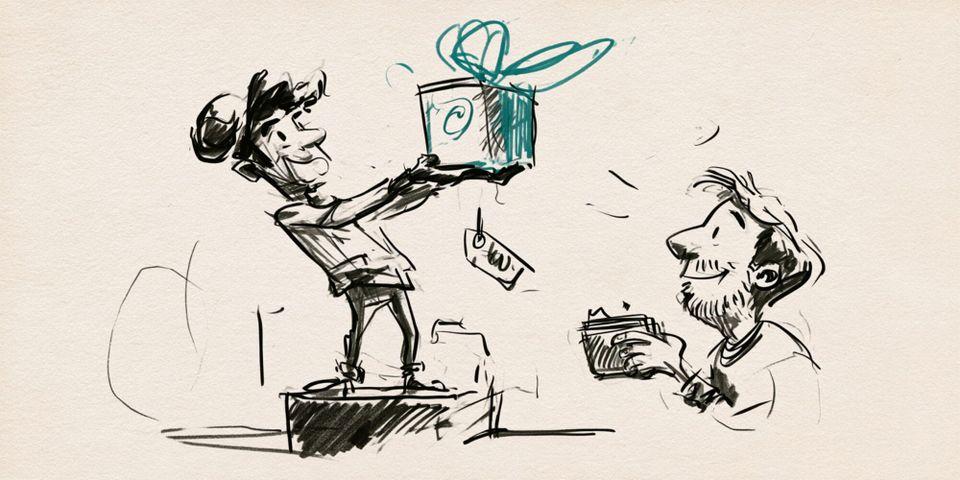
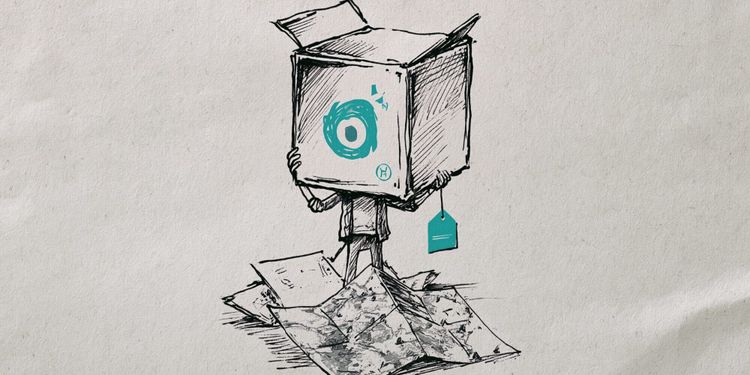
TLDR — There is a grammar trick underneath a lot of business jargon. Take a verb or an adjective, something you do or a way you behave, and freeze it into a noun. "Be agile" becomes "buy Agile." "Serve customers well wherever they turn up" becomes "an Omnichannel." Once a behaviour is a noun, it can be trademarked, packaged, priced and sold with added experts, and, more to the point, bought instead of done. The trick is grammatical. When someone is selling you a noun, ask what verb it used to be.
Somewhere today, someone is being sold "an Omnichannel." Not a way of serving customers well however they happen to get in touch, which is a perfectly sensible thing to want, but a Thing. A noun. With a capital letter, a price and, if you are really unlucky, a maturity model.
The business world runs on these. Synergy. Transformation. Agile. Digital. Data. AI. Every so often the parade acquires a new float and everyone applauds the costume. My favourite specimen is the job title, because job titles are where the parade reaches full cry. We have travelled, in about a decade, from Chief Digital Officer to Chief Data Officer to Chief AI Officer, each one essentially the Chief of the Next Amazing Technology, each appointment quietly conceding that the last Amazing Technology did not, on its own, fix anything. Give it a year and there will be a Chief of whatever the next noun is, usually just one page further on in the same guide than the rest of us, but spewing nonsense on some social platform in the self promoting / personal branded way that seems all the rage!
I am not mocking the people, well maybe a little! Plenty of them are able and well meaning, and some are genuine experts, occasionally the kind who cannot or will not explain what they do in plain words, which is its own quiet part of the problem. I am more mocking the machine that keeps needing a fresh noun to sell.
The grammar of it
Here is the recipe, and once you see it you cannot unsee it. It is nominalisation. You take a verb, adverb or an adjective, something you do or a way you are, and you turn it into a noun.
Being agile is a way of behaving. Agile, the noun, is something you can be certified in. Transforming is a verb, a hard, ongoing, unglamorous act. A Transformation is a programme with a budget and an end date. Change is a verb, a constant progression over time, but apparently needs managing by experts and a process. Thinking is a verb. A Methodology is a boxed set of someone else's thinking you can buy so you do not have to, and that always ends in tears.
You cannot buy a noun that used to be a verb. You can only do the verb. That is exactly the part they would rather you skipped.
The reason this matters is not that the words are ugly, though they often are. It is what the grammar quietly does to you. A verb is something you have to do, continuously, yourself. A noun is something you can acquire. The moment a behaviour becomes a noun, it can be trademarked, packaged, priced, put on a slide and, crucially, purchased instead of practised. The nominalisation is not an accident of style. It is the whole business model, hiding in the parts of speech.
Turn the noun back into a verb
The test writes itself. Whenever you are handed a shiny noun, translate it back into the verb it is standing in for, and watch what happens.
"Omnichannel" becomes "answer the customer sensibly whether they email, call or walk in." Fine. Sensible. Notice, though, that once you have said it as a verb, the noun has nothing left to sell you. You did not need to buy an Omnichannel. You needed to answer the phone and join up the notes.
"Digital transformation" becomes "change how we work so the technology actually helps." Also fine, also a verb, also suddenly the responsibility of the people in the room rather than a product on a shelf. "Synergy" becomes "these two teams should talk to each other," which costs nothing and requires no logo. Run this on almost any capitalised noun in a strategy deck and you get the same result. Either it collapses into a plain verb anyone could have named for free, or it collapses into nothing at all, which tells you what you were being sold.
The nouns that survive the translation are the honest ones. The ones that evaporate were doing a job, but the job was selling for someone else, not adding value to you.
The fix
So the next time a noun turns up wearing a capital letter and a price tag, do the small, deflating thing. Ask what verb it used to be. Ask who has to actually do the doing with that verb, and whether buying the noun quietly excuses them from doing it. Most of the time you will find you did not have a technology problem or a strategy problem. You had a plain verb that somebody would rather sell you than do.
None of this means the underlying ideas are worthless. Serving customers across channels is good. Changing how you work is necessary. Being genuinely agile is a real and valuable way to behave. That is exactly the point. They are verbs, and verbs cannot be bought. You cannot buy a noun that used to be a verb. You can only do the verb, over and over, yourself. Which is, of course, precisely the part the shiny noun was invented to help you skip.
So keep the deflating question handy. What verb is this, really, and who is quietly being let off doing it?