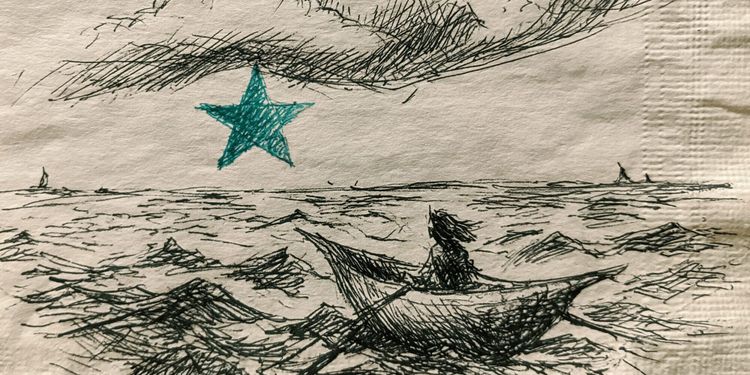

Old Fiddles and Young Guns
TLDR — There's a peculiar reaction, whenever someone with a long, hard-won CV lands a big job. It seems to be one of faint surprise that experience turned out to be useful. It sits alongside a seemingly growing quiet obsession with "runway" and youthful energy. Years ago I sketched a deliberately provocative organisation staffed only by over-55 mentors and under-30 executives, one each assigned to each role. Revisiting it, the joke keeps its point: the thing that actually makes teams work is experience and energy pulling together, not either one winning.
Writing this article today has been prompted by recent news which was filled with a particular expression pulled by media commentators when someone with a long and serious CV gets a big, visible job. It is a kind of polite surprise. Fancy that, they seem to say, an experienced person turning out to be useful. As if the years invested by them were a quaint hobby rather than the material point.
It runs alongside its opposite, which is our seemingly increasing quiet worship of "runway." The unspoken preference for the candidate with more road ahead of them, more energy, more upside, more of a cultural fit with the prevailing average age in the office. I have never had much time for any of this, it is always best to just focus on the actual human being. The us-and-them, old-versus-young framing is lazy, and it is usually a cover for not thinking about what the job actually needs.
So, in that spirit, let me revive a deliberately provocative idea I sketched about a decade ago. Bear with me. The idea has a point buried in it.
An organisation of Old Fiddles and Young Guns
Picture a company staffed by only two kinds of people.
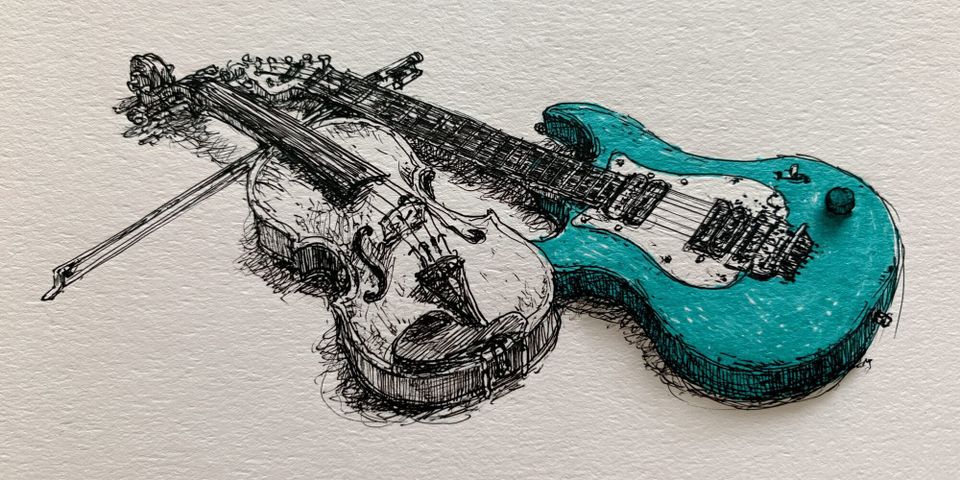
The Old Fiddles. The over-55s. As the saying goes, there is many a good tune played on an old fiddle. These are the mentors, increasingly part-time or 'fractional', there for the wisdom, the desire to remain useful and 'give something back' rather than the grind.
The Young Guns. The under-30s. As Wham put it, 'young guns, go for it'. These are the graduates and apprentices fast-tracked to being the executives, the ones actually running things, full of energy and cheap in the way the young forgivably are.
Every leadership role has two people in it: a Young Gun doing the job and an Old Fiddle mentoring it. And here is the deliberately provocative bit. In a sort of Logan's Run arrangement, at thirty the Young Gun has to leave, out into the wider world, hopefully carrying great experience, a great attitude and a few great stories. The alumni scatter, do interesting things, and, if the idea has any legs, some of them come back decades later as Old Fiddles.
It is even, if you squint, economically tidy. Young Guns are cheaper. Old Fiddles aren't full-time. The former employees are exactly the people predisposed to hire the organisation when they need help. A neat little flywheel of talent.
Before anyone calls a lawyer: this is a thought-experiment, not an HR policy. You obviously cannot build a real company that hires by decade and evicts people at thirty. The point was never the staffing chart. It was what such a chart accidentally reveals.
Why it's the whole model
I dreamed this up years ago, and separately I dreamed up the three words this blog runs on. Revisiting the fiddles and the guns, I realised that they were the same idea all along. Although perhaps it shouldn't be a surprise, given they came out of the same head.
The mindset is the heart of it. The winning attitude is not the Young Gun's fresh conviction on its own, nor the Old Fiddle's hard-won judgement on its own. It is the two fused: new ideas and real passion, married to experience and perspective. That combination is genuinely powerful, and it chimes with something older than any company. For most of human history, every age of a society worked together to get anywhere. Perhaps it is more shocking that we are the odd ones for trying to sort people into cohorts and bet on one.
The method matters more now, not less. When AI is turning access to methods and information into a cheap commodity, the edge is no longer knowing the technique. It is choosing the right one and implementing it well. Domain experience, credibility, humanness and trust are increasingly vital. The Old Fiddle has almost certainly seen a version of this before and knows which way it tends to go wrong. The Young Gun brings fresh eyes that stop the 'old hands' re-fighting the last war rather than focusing on the new challenge. One without the other is half-blind.
And momentum is perhaps the obvious one. The Young Gun supplies the raw energy. The Old Fiddle aims it in the right direction and is there to reassure, reinforce and course-correct when the stumbles and the blocks arrive, as they always do. Youthful drive on the rails of experience.
This gag though writes its own warning label, mind. Imagine an organisation with the Old Guns that can blow up in your face, or the Young Fiddles that play an awful tune. Maybe you know one of those organisations?
The aim is not to prize one age over another. It is to set high-potential Young Guns on the right path to becoming the Old Fiddles, and in the meantime help them create some masterpieces.
The fix
So the practical version, stripped of the fancy dress, is unglamorous and old-fashioned. Build teams that deliberately mix drive and judgement instead of optimising for one and hoping the other turns up. Hire for attitude and mindset, not just for how much runway a person has left. And treat the reflexive surprise that experience is useful, or the reflexive assumption that youth is a risk, as the lazy thinking it is.
Personally, I try to squeeze a decent tune out of this old fiddle. I was no semi-automatic as a Young Gun. But I think I had my moments as a rifle. The best work I have seen always had both in the room, that's the old and young mindsets, not the guns!!