

Before you hire an executive coach
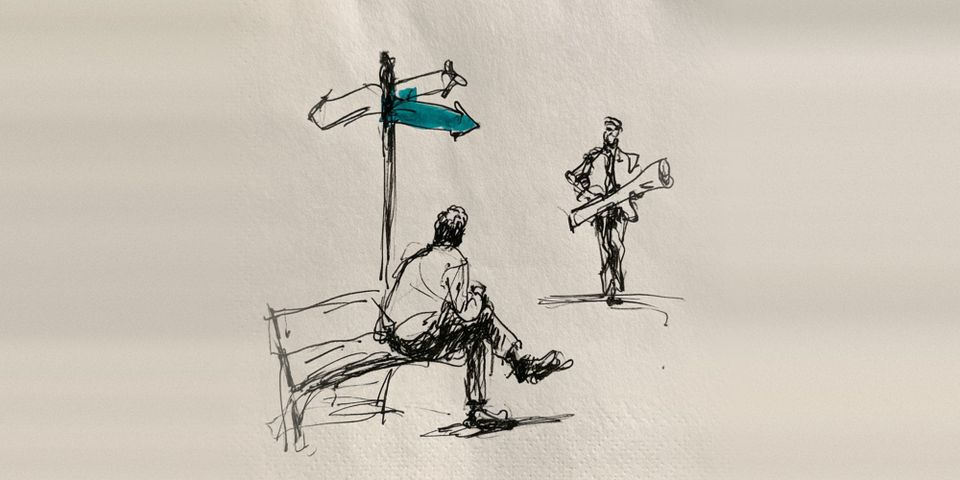
TLDR — Executive coaching has become a packaged, certified service, and like every packaged service it defaults to a tick list. Before you buy one, do the diagnostic yourself: in the specific context where you are struggling, is the gap in your mindset, your method, or your momentum? Most of the time it is mindset, and your body has been telling you so for months. If you sell coaching, your first job is that same diagnostic, done honestly, even when the honest answer costs you the engagement.
A pitch lands
A pitch for executive coaching landed with me the other week, which is what set me thinking. I have never had a coach. I have mentored a fair number of people, formally and otherwise, and I have spent a career borrowing from people I admired, trying to work out how they thought. I never felt the need to pay someone for the privilege.
That is not an argument against coaching. Some of the best people I have met do it, and they bring very little ego and a great deal of care to the job. But I have also met the other sort, for whom the client is mainly an audience, and the field as a whole has gone the way of every service that discovers it can be packaged: programmes, accreditation, a body to certify the certifiers. A set of methods with a certificate on top.
Readers of this blog will recognise the move. Something people used to do for each other has been turned into a noun you can buy. So it is worth running it through the model from both sides of the table.
Which MMM leg is it?
If you are considering an executive coach, or someone has suggested one to you, the first job is not to find a coach. It is to answer, properly, why. Not the version you would give HR. The real one.
The MMM model helps here because it forces the question into three parts. Is the gap in your mindset, meaning you are not clear what you want in this context, or your attitude to it has curdled? Is it method, meaning you know what you want and cannot see how to do it? Or is it momentum, meaning you know both and are not moving?
And the context matters more than people allow. Nobody has a single mindset. You can be full of energy and purpose in one room and lethargic and drifting in the next. So ask the question about the specific situation where things are not working, and ask a couple of people who see you in that situation how you show up in it. Their answer will not match yours.
In my own case, when I have done this honestly, the answer has nearly always been mindset. And what strikes me, looking back, is how long I knew before I admitted it. Your body gives you the feedback long before your head is prepared to receive it. The sinking feeling on a Sunday evening, the meeting you keep finding reasons to move. We are remarkably good at explaining these away, often deceiving ourselves and not others.
Sometimes you act on the feeling before the diagnosis is finished. You just know, and you move. I would not talk anyone out of that; it beats a year of procrastination and it is the purest form of listening to the feedback from your own body. But it is incomplete, and it is worth going back afterwards to fill in what the feeling knew that you consciously didn't, because that is what sets the mindset straight at the start of the next thing rather than the end.
What the market defaults to
Ask anyone selling executive coaching whether it is a mindset thing, a method thing or a momentum thing and they will tell you it is all three, beautifully integrated. Then look at the programme, and it is a tick list. Sessions, models, a 360, a development plan, a competency framework for the role you might have next.
That is the noun doing what nouns do. A verb, helping someone think, has been frozen into a product with a start date, a price and a certificate, and the product has to be the same for everyone or it cannot be sold at scale. So the diagnosis gets skipped, because the diagnosis is the expensive, unrepeatable, human part, and the package is designed to make it unnecessary.
The result is that a great deal of coaching is bought to close a gap that was never identified, for a future role that may not exist, in order to satisfy a process that needed a box ticked. Everyone involved knows this. Nobody says it.
The fix, for both sides of the table
If you are the buyer: be crystal clear where the gap is, in this specific context, and then be equally clear why the cheaper answers will not do. Training, if it is method. A mentor, if it is a matter of seeing how someone else thinks. A serious talk with yourself, if it is mindset and you already know it. Executive coaching earns its fee when it does something those cannot, and you should be able to say what that something is before you sign.
"Be clear where the gap is, in this context, and why the cheaper answers won't do."
If you are the seller: your first job, in the first meeting or before it, is that diagnostic. Help the client find out which leg is failing, in which context, and say so plainly even when the answer is not "coaching". I accept that walking away is not always commercially sensible. If you are the staging post that an internal process requires, fine, take the work. But the commitment underneath it has to be to growing the person across the whole of their life, not to getting them through the next competency review. The clients can tell the difference, and so, eventually, can the market.
Carnegie's line was that you cannot push anyone up a ladder unless they are willing to climb a little themselves. The willingness is the mindset. Everything else is method, and method you can buy.